Ownership
Nor'easter and Power Outage Prep: AWD, Clearance and Onboard Power
Getting ready for New England storm season in a Ram 1500, Grand Cherokee, Durango, Gladiator or Cherokee hybrid: clearance, 4x4, bed outlets and fuel range.
By the New England CDJR editors · Updated November 6, 2026 · 6 min read
A good nor'easter does not just dump snow. It brings wet, heavy flakes that pull down branches, and wind that finishes the job on the power lines. In coastal Maine, the Cape, the hills of western Massachusetts and the Connecticut shoreline, an outage can last days, not hours. Meanwhile the road outside may still be waiting for a plow.
This guide is about the vehicle side of that problem: whether you can get out, whether you can get back, and what, if anything, the vehicle can power while you wait. It also admits where a vehicle is a poor substitute for a proper generator.
The first problem is the road
Storm roads in New England come in layers. State highways get plowed first, then main town roads, then the dead-end lane where you live. For a stretch after the storm, you may be driving through a foot or more of unplowed snow with a crown in the middle. That is a clearance and traction problem.
Clearance decides how much snow your vehicle can push before the underbody starts to drag. Here is what the manufacturers list for the models in this guide.
| Model | Listed ground clearance | Drive system |
|---|---|---|
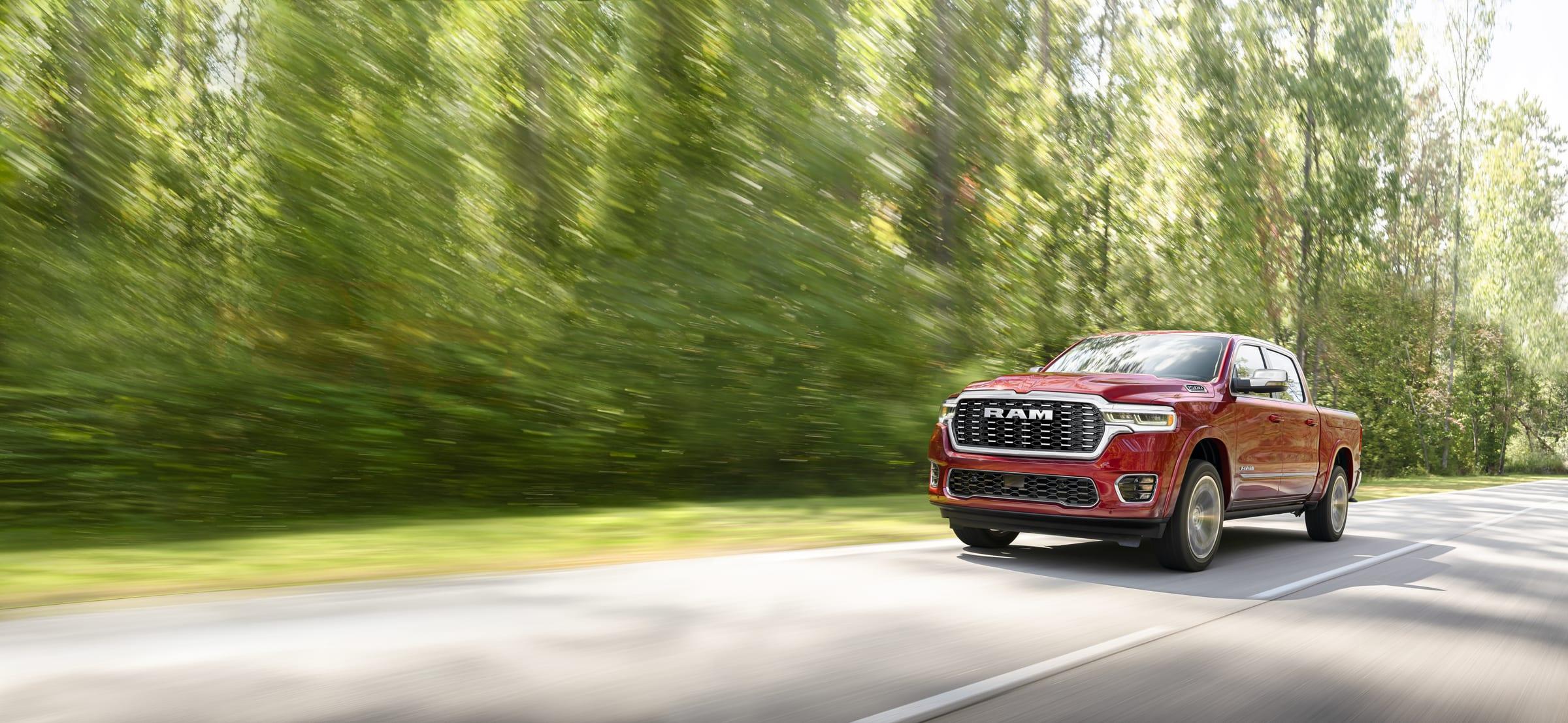
| Ram 1500 (air suspension, Crew Cab) | 8.7 in Normal; up to 10.7 in Off Road 2 | Part-time or on-demand 4WD, by trim |
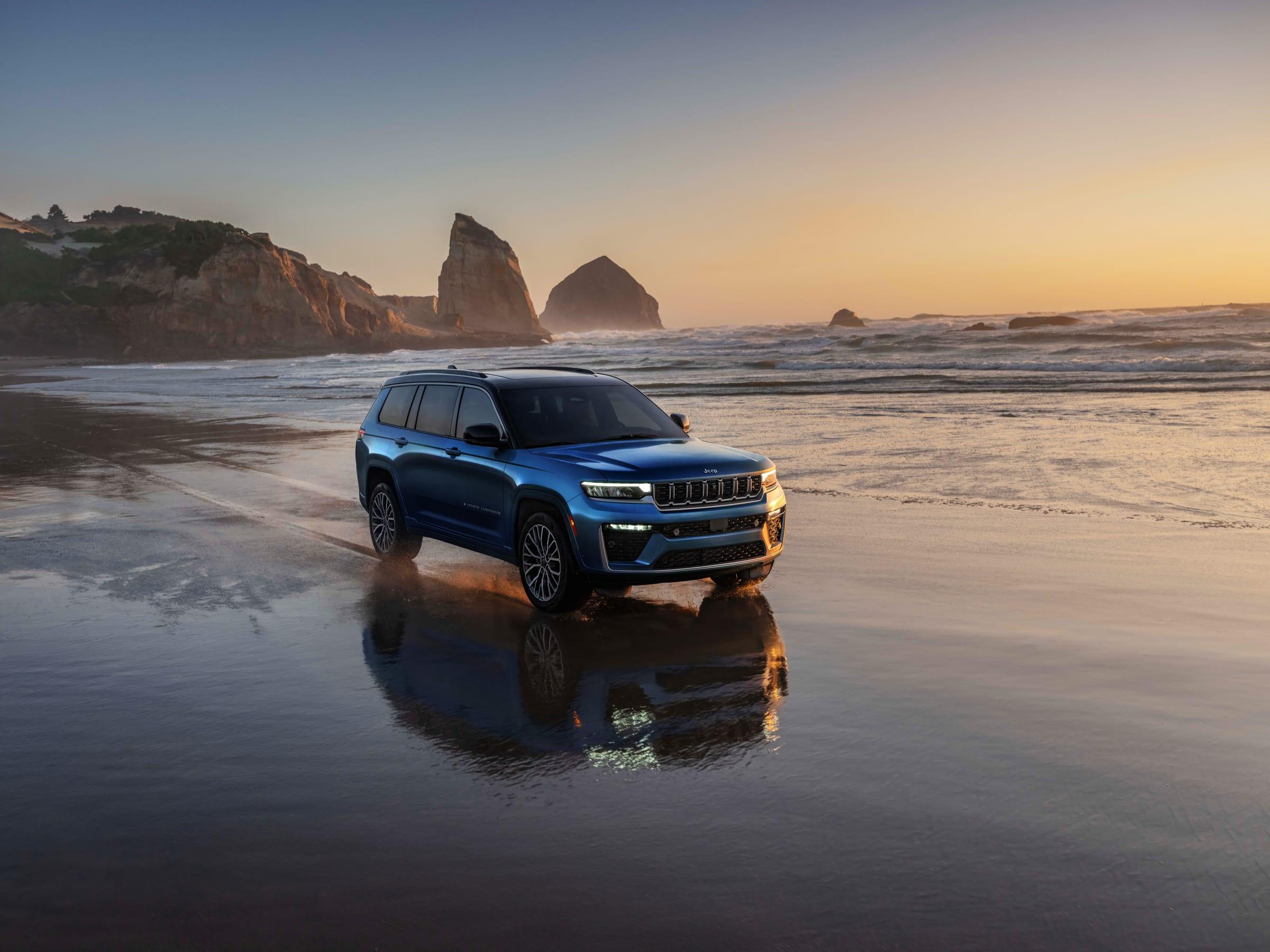
| Jeep Grand Cherokee | 8.4 in standard; up to 11.4 in Trailhawk | Full-time active 4WD, optional or standard by trim |
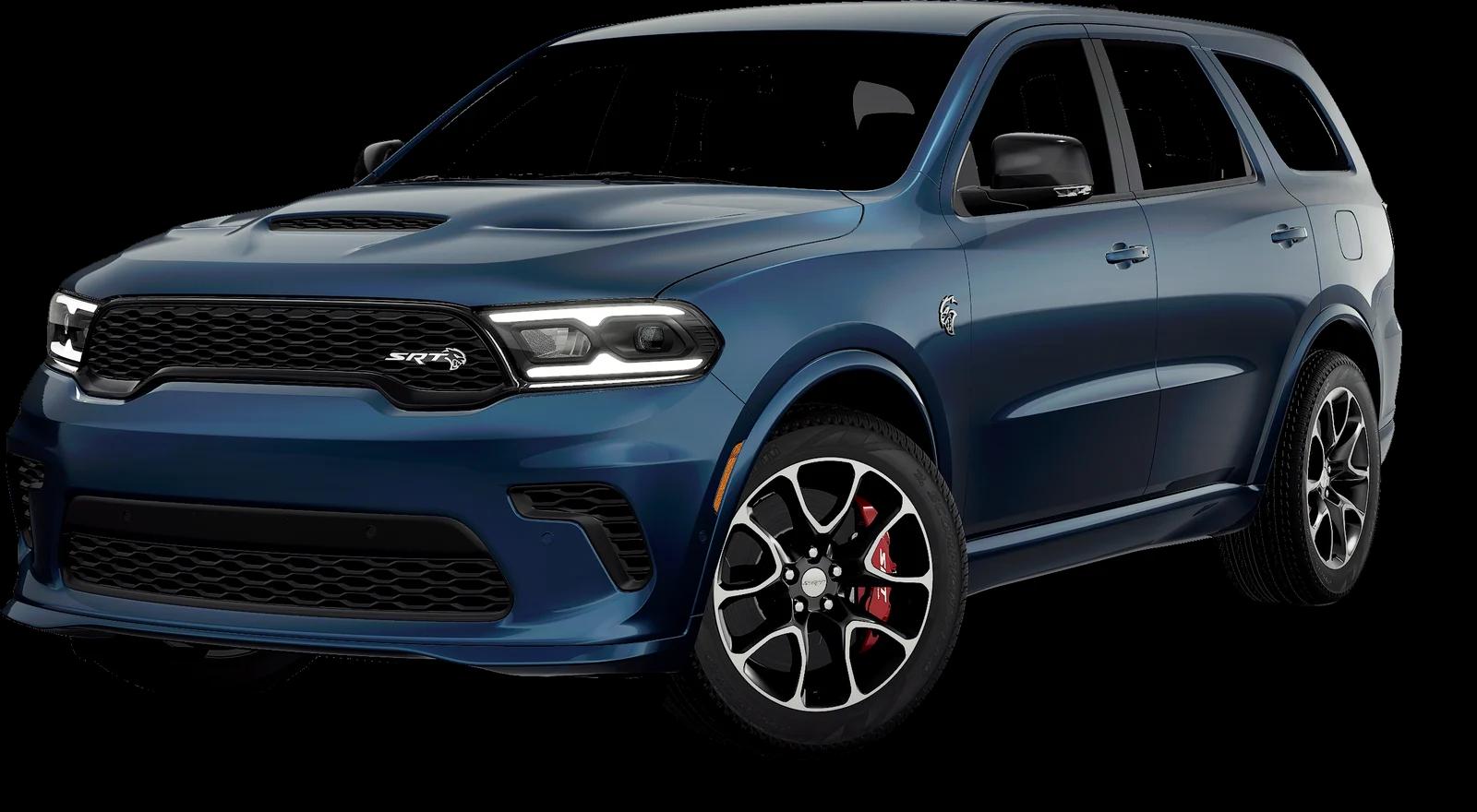
| Dodge Durango | 7.8 to 8.0 in | All-wheel drive, standard |
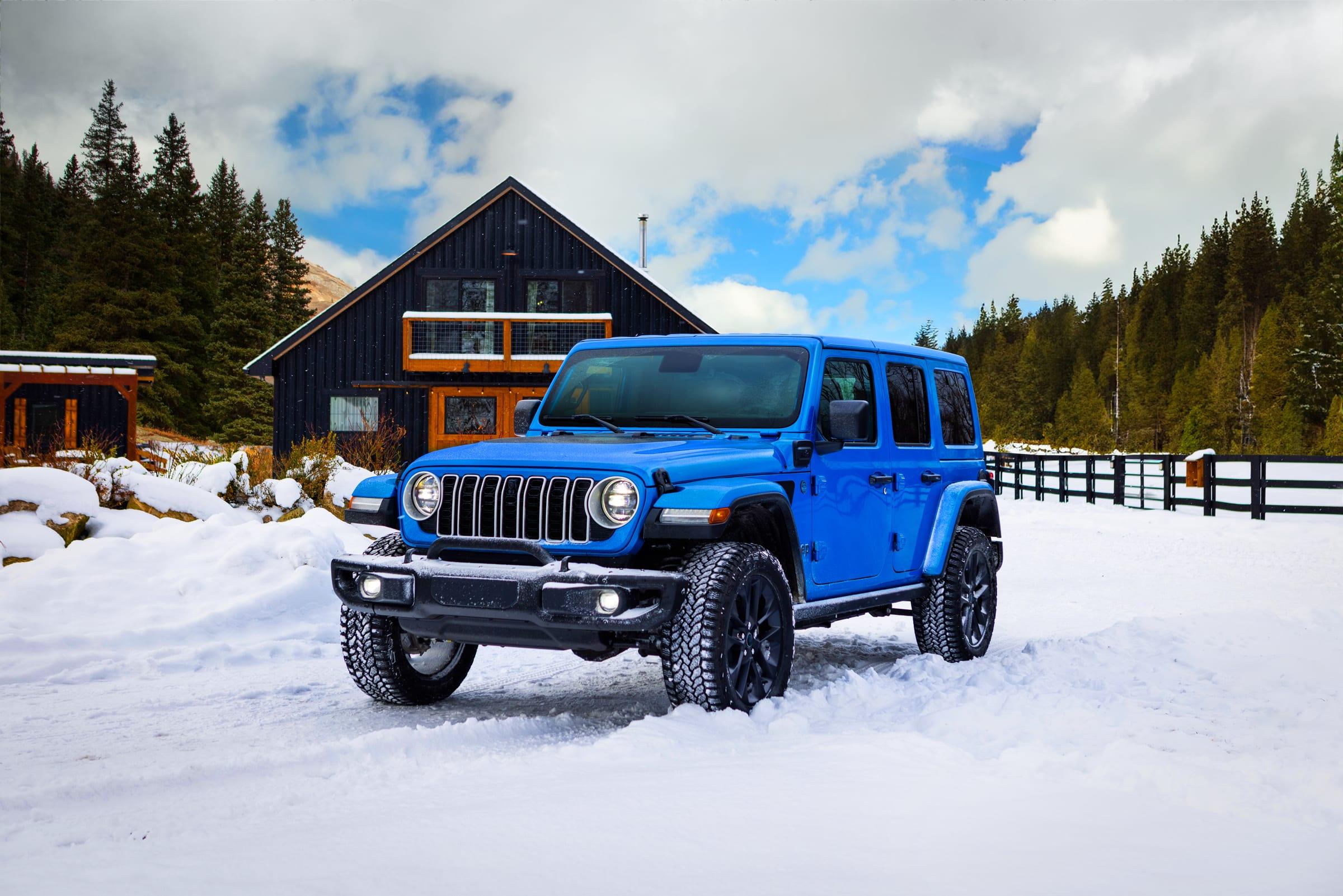
| Jeep Gladiator | 10 in (Sport, Willys) to 12.9 in (35-inch tires) | 4x4, standard on every trim |
| Jeep Cherokee | 9.0 in (Trailhawk only listed) | Active Drive II 4x4, standard |
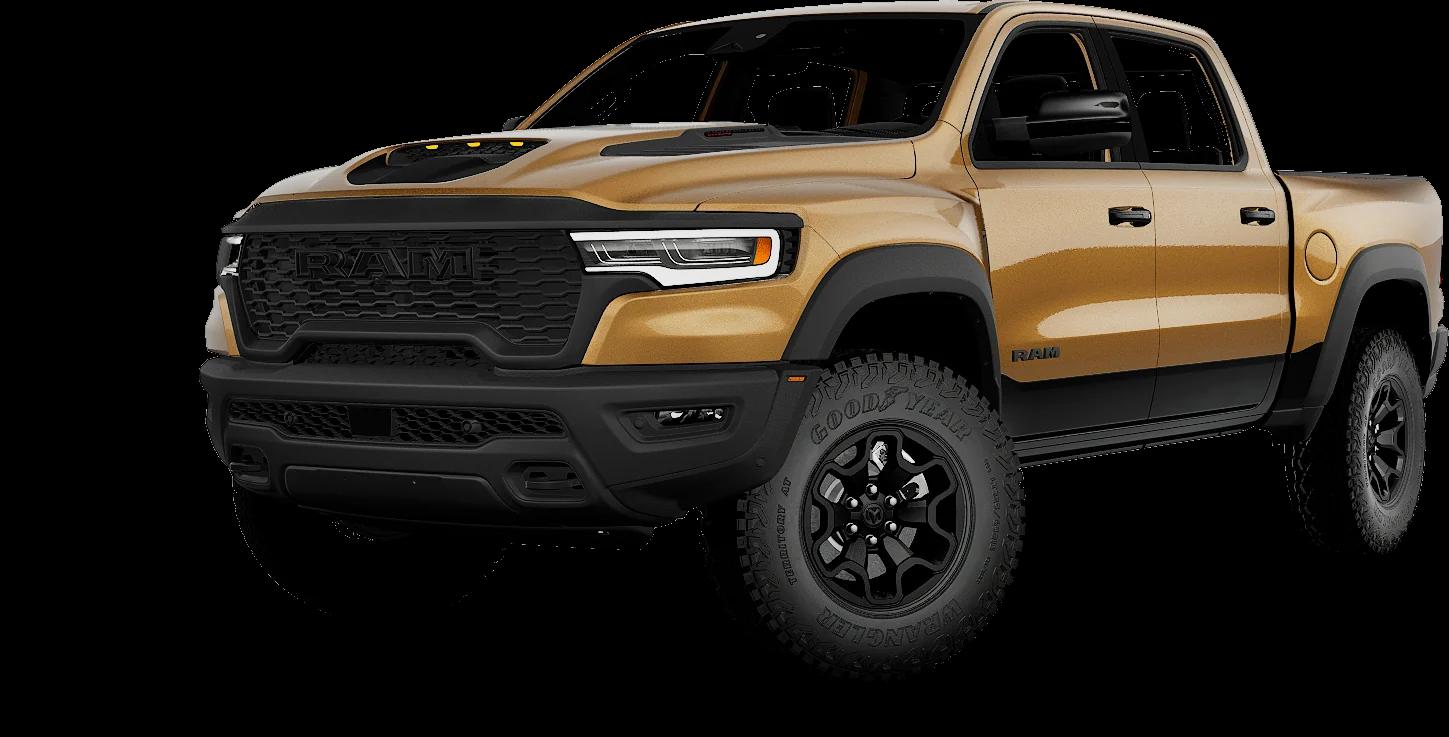
The Ram's air suspension raises the truck for deep snow, and its 6.7-inch Entry/Exit setting drops it for loading. Not every 1500 has the air suspension, so ask what the truck you are looking at lists. The Durango has the lowest listed clearance of the group, which is fine for plowed roads, but marginal for a long, unplowed driveway.
AWD and 4x4: what each helps with
Four-wheel drive helps you get moving and keep moving. It does not help you stop, and it does not make a vehicle immune to a hidden ditch. Tires and speed matter more than drive type on ice.
Some details by model:
- Durango. All-wheel drive is standard on every 2027 trim. With a 5.7-liter HEMI V8 making 360 horsepower, it has the pulling power to climb a snowy hill, though fuel economy is modest.
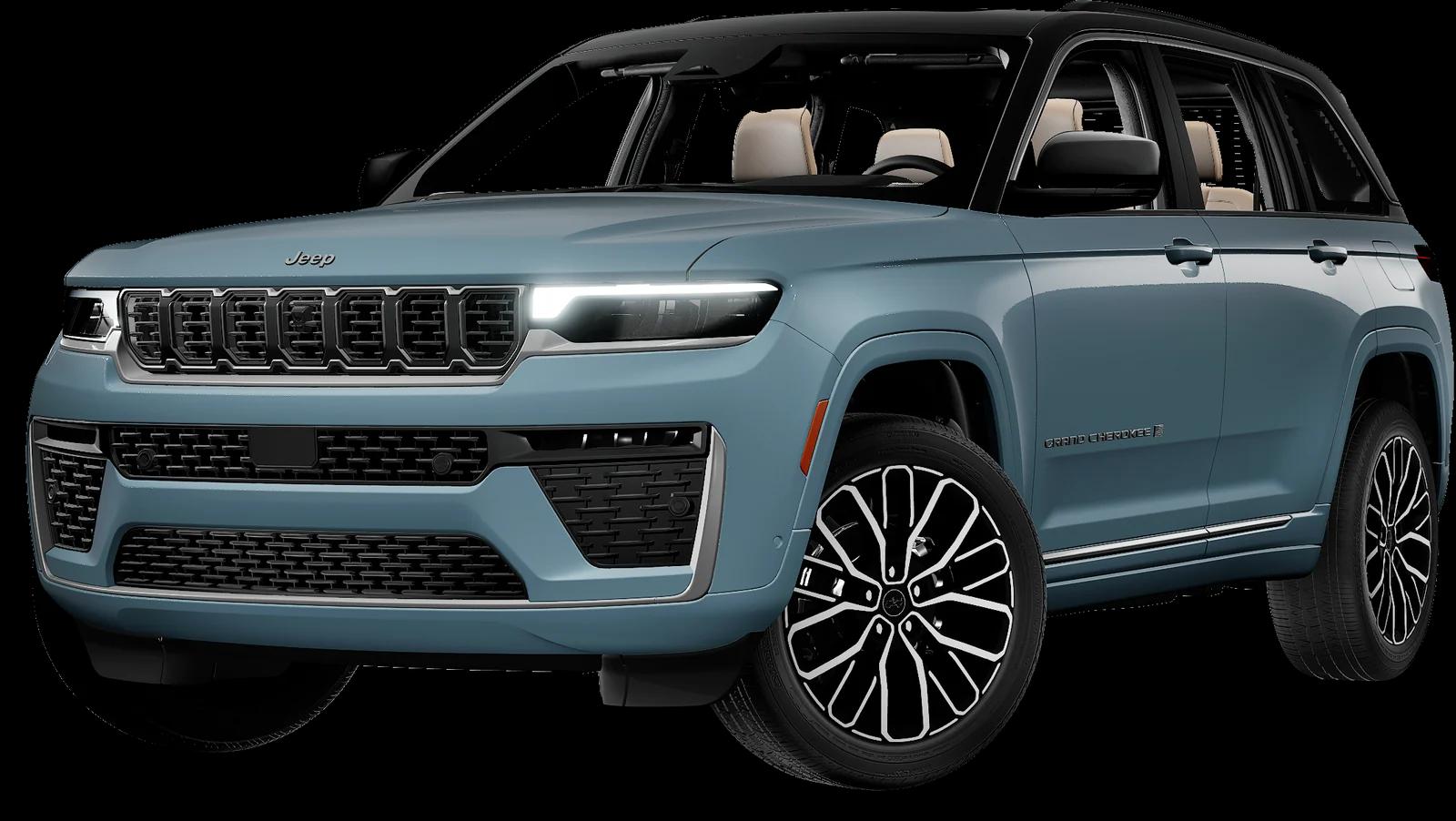
- Grand Cherokee. The two-row version and the three-row L both offer 4x4. It is standard on Limited Reserve, Summit and Trailhawk, and optional on the lower trims. If you live somewhere that gets unplowed snow, price the 4x4 version.
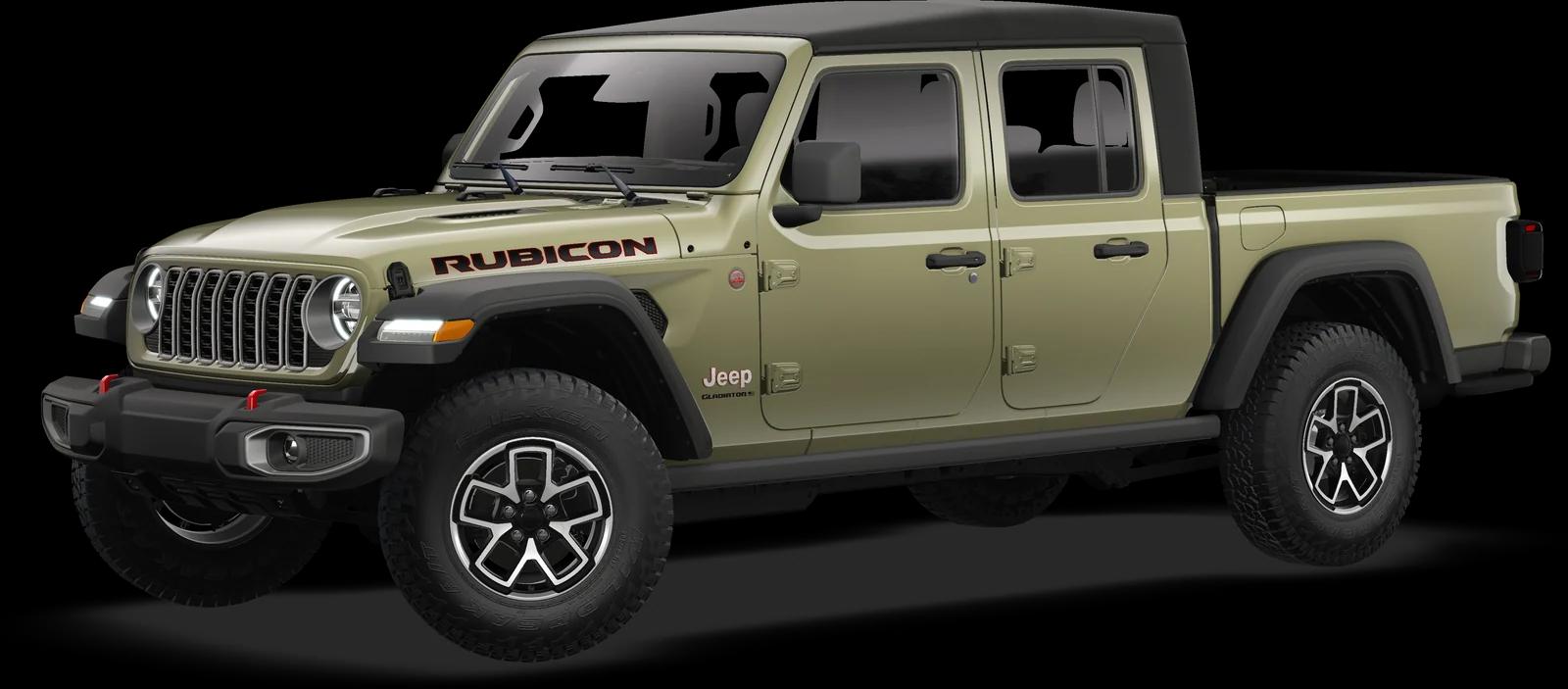
- Gladiator. Every Gladiator has 4x4. Command-Trac is part-time, Selec-Trac is full-time and Rock-Trac on the Rubicon has a 4.0:1 low range, which is useful for pulling out of a drift.
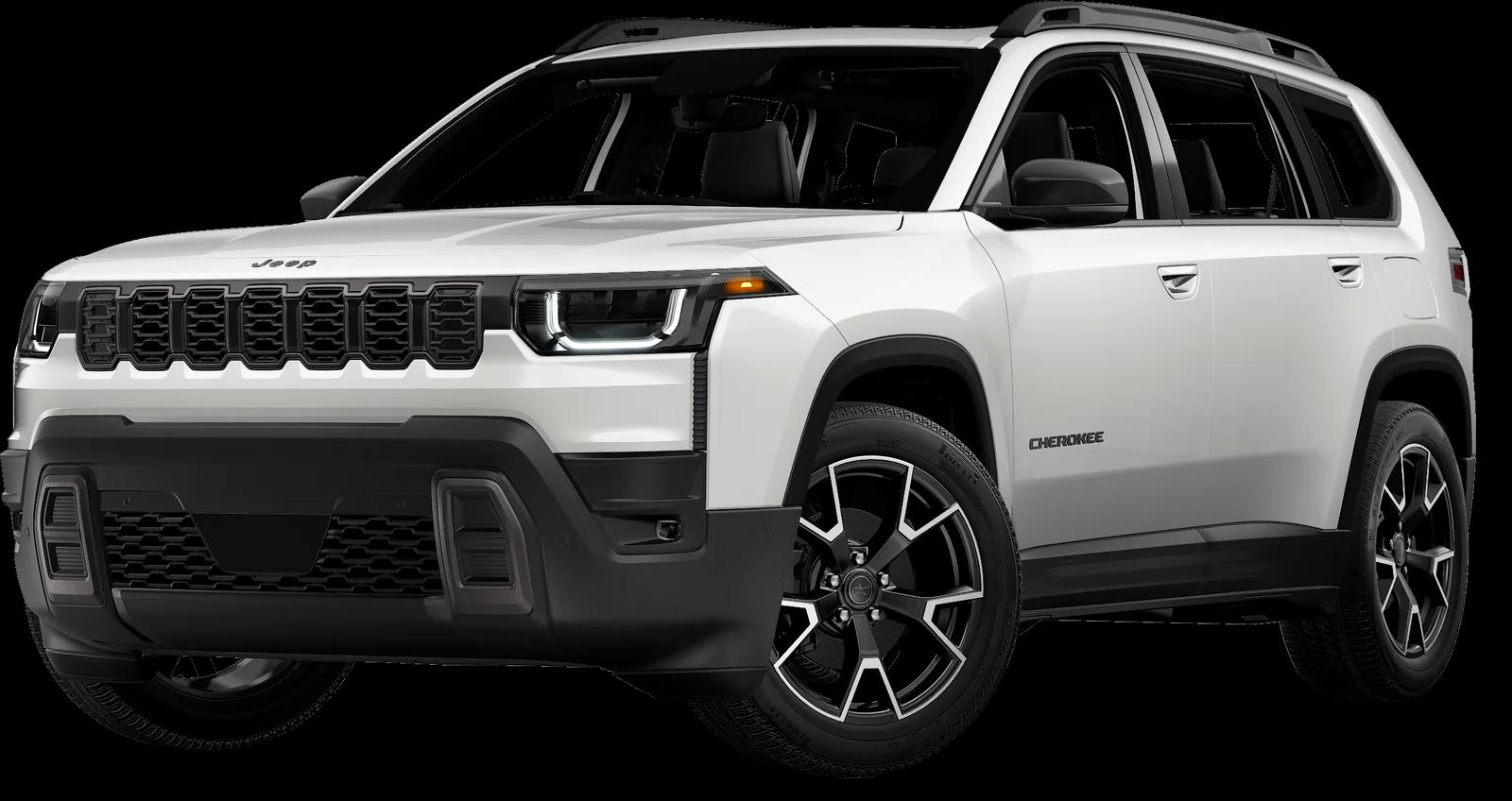
- Cherokee. Active Drive II is standard, which is a good value for a compact with a $35,130 starting MSRP, before destination.
- Ram 1500. Tradesman, Express and Warlock are part-time 4WD. Big Horn, Rebel, Laramie, Limited, Longhorn and Tungsten are on-demand. The 1500 also has a Snow drive mode on 4x4 models.
Whatever you drive, winter tires change the picture more than any badge. A set of dedicated winter tires on a front-drive crossover often outperforms all-season tires on a 4x4. The right call for you depends on your roads.
Onboard power: what is actually listed
This is the part people ask about most, and the part where manufacturers' claims need careful reading.
The Ram 1500 is the one on this list with a documented feature for the job. Trucks with the 3.6-liter V6 eTorque can add 2 kW of onboard power with two 120-volt bed outlets. Two kilowatts is 2,000 watts. That is enough for a few lights, phone chargers and small tools, and not much more. Anything that draws a surge at startup, like a well pump, needs a closer look. The onboard power is optional, and Ram does not list a stand-alone price for it, so ask a dealer before you count on it.
The Gladiator has a 115-volt bed outlet as part of the cargo management group on Rubicon X, which starts at $64,180, and Mojave X, which starts at $63,295, before destination. The wattage is not listed. A bed outlet like that is handy for tools, a work light or a laptop, not a house.
The Grand Cherokee, Durango and Cherokee have no household-style outlet listed. Charge your phone from the USB ports and treat the vehicle as a place to warm up, not as a power source for the house.
One safety point. Never run an engine in a closed garage, and keep the tailpipe clear of snow when idling, since a blocked exhaust can push carbon monoxide into the cabin. If your outage plan includes a vehicle, buy a battery-powered carbon monoxide alarm for the house too.
Hybrid and electric when the grid is down
A grid failure raises two practical questions: can you refuel, and can you recharge?
Gas pumps need electricity, so many stations go dark with the neighborhood. A Cherokee hybrid is a self-charging system with a 1.08-kWh battery that is topped off by braking, and it has no plug. It cannot be charged from a wall socket, so an outage does not take away its charging options. Jeep lists nothing about powering a house with it.
Plug-in EVs, such as the Recon and the Wagoneer S, depend on charging. Jeep lists a 120-volt Level 1 charge for the Recon at about 52 hours, and about 6.8 hours at 240 volts, so a home outage means finding charging elsewhere. Do not assume either one can power a house, because Jeep does not list that. Cold also cuts range, as Jeep itself notes.
The practical lesson holds for every powertrain: top up before the storm arrives, not after.
Rough fuel range for a multi-day outage
The numbers below are a rough estimate worked out by multiplying fuel tank size by highway mpg. Real range is lower in snow, with the heat on and with idling.
| Model | Tank | Highway mpg used | Rough range |
|---|---|---|---|
| Ram 1500 (V6 or Hurricane SO, 4x4) | 26 gal (33 gal optional) | 24 | About 624 mi (792 mi with 33 gal) |
| Grand Cherokee (2.0L turbo, 4x4) | 23 gal | 25 | About 575 mi |
| Durango (5.7L HEMI) | 24.6 gal | 22 | About 541 mi |
| Gladiator | 22 gal | 22 | About 484 mi |
| Cherokee hybrid | 13.7 gal | 35 | About 480 mi |
Jeep estimates more than 500 miles per tank on the Cherokee, using a mix of driving, so the highway-only figure above comes out lower. The takeaway is that a larger tank lets you drive less often to a working pump.
A short pre-storm list
- Fill the tank when a storm is forecast, and keep it above half through the winter.
- Clear snow and ice from every window, lamp and the roof before you drive.
- Keep a shovel, sand or kitty litter, a blanket, a flashlight and water in the cargo area.
- Confirm that your tires have decent tread and that the spare, if you have one, is inflated.
- Check town and state sites for road status before you go out. Do not drive through a downed wire.
If you are shopping for a storm-ready vehicle, plan on driving it in snow before you buy. And remember that prices change, so confirm current MSRP, options and availability with a dealer.